ISAIAH 8:20 "TO THE LAW AND TO THE TESTIMONY: IF THEY SPEAK NOT ACCORDING TO THIS WORD, IT IS BECAUSE THERE IS NO LIGHT IN THEM." Applications and Testimonies TO Share with your friends of SABBATH SCHOOL ANNEX: Commentaries and/or Summaries of the Sabbath School lesson. All the different versions. Go to www.ssnet.org and CLICK ON ADULT SS AND SCROLL DOWN FOR VERSIONS IN OTHER LANGUAGES. VERSES from www.biblegateway.com AND www.biblia.com. BE BLESSED!!!
The Sabbath School Lesson
REV. 14: 12"THIS CALLS FOR PATIENT ENDURANCEON THE PART OF THE PEOPLE OF GOD WHO KEEP HIS COMMANDS AND REMAIN FAITHFUL TOJESUS."Click on the links for the SABBATH SCHOOL LESSON OF THE ONGOING WEEK AT THE BOTTOM OF THIS MESSAGE TO THE RIGHT. And Read THE INTRODUCTION, THE SUBTITLES AND THE CONCLUSION first, then if you just want to have a general idea of the text, read the beginning and the end of each paragraph. ALWAYS KEEP IN MIND AND RELATE TO THE SPECIFIC SUBJECT YOU ARE STUDYING, REMEMBER THE BIG TITLE AND THE SUBTITLES. Always be aware of the context. WHAT IS THE QUESTION AT STAKE? This is what's important...BE BLESSED!!!
The links to Bible texts will no longer specify the Bible version. That allows you to choose any Bible version available on BibleGateway. Choose your preferred version from the dropdown menu near the top of the Bible text page. Press the reload/refresh button on your browser (not the update button on the text page.) You can specify some choices in Preferences. Preferences will remember your choices in a "cookie" on your computer.
"Hear, O Israel: The Lord our God is one Lord: And thou shalt love the Lord thy God with all thine heart, and with all thy soul, and with all thy might" (Deuteronomy 6:4, 5).
True to His Word that the rebellious generation who had refused to enter the Promised Land would not enter it, the Lord now brought a new generation to the borders of that same land. There He directed Moses and the high priest, Eleazar, to number the congregation of males from 20 years and upward, “all that are able to go to war” (Num. 26:2). Surprisingly, the total in this second count amounted to 601,730 (vs. 51), nearly the same as that in the first count, 603,550, 40 years before (Num. 2:32). In spite of the divine judgment on the nation, in which the first generation (except for Joshua and Caleb) perished, God had multiplied them abundantly, and the armies of Israel mustered in the plains of Moab were for all practical purposes as large as those of the first generation.
Many questions, however, remained: Was this new generation, having lived with the results of their parents’ bad mistakes, ready to learn from those mistakes and obey the Lord? How ready were they to take up the mantle now given to them? What lessons were they going to have to learn, and what can we learn from them, as well?
*Study this week's lesson to prepare for Sabbath, December 19.
SUNDAY
Land Division
After the debacle at Shittim, a census was taken of the males 20 years of age and older (Num. 26:1–4). With just a few notable exceptions (see vss. 64, 65), the older generation had died off, and a new one had appeared.
What was one of the reasons that the census was taken? Why would this be important?Num. 26:52–56.
Once the second generation had conquered the land, it needed to be divided fairly; otherwise, this could have become a source of fighting and confusion. Fortunately, Moses was still living and could direct in this important matter. As the text states, those tribes with a lot of members were given the most land; those with fewer, less. What could be fairer than that?
Read Numbers 27:1–11. What important principles do we see being made manifest here?
A key element here is the sanctity of the family, especially in regard to property and the rights of inheritance. It’s clear that the idea was to keep the property as close as possible within the family. The land, after all, was an “inheritance,” and so it belonged in the family.
As we see, too, this was not a one-time deal. Because these women had the faith and courage to approach Moses over an issue of basic fairness, the Lord established a “statute of judgment” (Num. 27:11) that would endure for future generations and would protect women who might have found themselves in similar circumstances.
It’s always so easy to let things like possessions dominate us so that we forget even the most basic Christian principles. How can we protect ourselves from allowing our desire for things to ruin our relationship with God and with others?
MONDAY
Successor
After so many years in the wilderness, the children of Israel were soon to make their crossing into the Promised Land. A new generation had arisen, that was soon to inherit the land first promised to them when still in the loins of Abraham many centuries earlier (Gen. 17:8). Thus, despite the setbacks, the rebellions, the murmuring, the lack of faith in His people, God was going to fulfill His word. He was just going to do it with another generation, that’s all.
In Numbers 27:12 the Lord talks about the land that He has “given” (in the past tense) to the children of Israel, even though they were not there yet. What does that tell us about God’s promises?
After the Lord told Moses again that he could not cross into this land because of his sin, how does Moses respond? That is, what is Moses’ main concern? What does that tell us about the kind of man he was?
Why was it important that Joshua be given his charge before all the congregation?
Moses was soon to die, his work being done. The charge was now given to Joshua, Moses’ appointed successor. How interesting that it wasn’t one of Moses’ sons but, instead, someone who had proved his own worth. God, not Moses or the congregation, chose Joshua.
Also, the texts make it clear that, as with Moses, Joshua was to lead only through the guidance of God; that is, besides the written laws and commandments, he also was to seek the Lord’s will through the “judgment of [the] Urim before the Lord” (vs. 21).
How often do you seek the Lord in prayer regarding important decisions you need to make? Upon what basis do you make your decisions, if not through seeking God’s will?
TUESDAY
Sacrificial System Reaffirmed
When the Lord spoke audibly the Ten Commandments (Exodus 20) from Mount Sinai, and commanded the building of the tabernacle (Exodus 25), the second generation would have been children. Now God chooses to reaffirm, in summary form, the sacrificial system to the adult second generation.
Numbers 28:1–8 described the “daily” or “continual” offering of a lamb in the morning and one in the evening. It was arranged in such a manner that this sacrifice always was burning (Lev. 6:9, 13). This “daily” or “continual” was the sanctuary’s centerpiece. It took priority over all other sacrifices and was central to Israel’s worship. This sacrifice represented the constant availability of God’s forgiveness and acceptance through the Redeemer prefigured in the sacrifice.
Read Romans 5. What does that tell us about the fullness and completeness of Christ’s sacrifice for us?
On the Sabbath day (apart from the “daily”) a special sacrifice was made. It consisted of two lambs, morning and evening (Num. 28:9, 10). Then, Numbers 28:11–15 detailed the sacrifices for the new moon, which was then followed by the festivals: Passover, Pentecost (Feast of Weeks), the Feast of Trumpets, the Day of Atonement, and the Feast of Tabernacles (Numbers 28, 29).
“Some wonder why God desired so many sacrifices and appointed the offering of so many bleeding victims in the Jewish economy.
“Every dying victim was a type of Christ, which lesson was impressed on mind and heart in the most solemn, sacred ceremony, and explained definitely by the priests. Sacrifices were explicitly planned by God Himself to teach this great and momentous truth, that through the blood of Christ alone there is forgiveness of sins.”—Ellen G. White, Selected Messages, book 1, p. 107.
Why is it so important to trust only in Christ’s merits and righteousness, as opposed to anything in ourselves, as the only means of salvation? What happens if we start looking to ourselves, as if somehow we could be good enough to deserve or earn our salvation?
WEDNESDAY
Keeping Your Word
Read Numbers 30 regarding vows and oaths. What important principle can we take away from this chapter for ourselves today? What does this tell us about the importance of our words? What warnings should we take away from here, too?
It’s one thing to flat-out lie; that’s obviously sinful and wrong. But that’s not what’s being talked about here. How often have we made a solemn promise, or a vow in the Lord’s name, that we absolutely intended to keep at the time, only to eventually break it for one reason or another? In this immediate context, we’re dealing with vows made “unto the Lord,” but in reality, when we–especially as professing Christians–say that we are going to do something, we should follow through on it. That we intended to do it at the time we said it will make little difference to the one to whom we make the promises. Maybe the individual will believe us, maybe not. The point is, as professed Christians, what kind of representative of Christ are we if we are going around making promises or vows that—for whatever reason—we end up not keeping? What good is our religion if we don’t keep our word? That’s why it is crucial that we be very careful in what we promise or make vows about, because we might find ourselves in the embarrassing position of not being able to follow through, no matter how good our intentions.
“The obligation to which one’s word is pledged—if it do not bind him to perform a wrong act—should be held sacred.”—Ellen G. White, Patriarchs and Prophets, p. 506. In Israelite culture, failure to keep one’s promise, sworn in the name of God, was regarded as a sin of omission. In a real sense, failure to fulfill a vow is taking His name in vain, especially if we are Christians who, ideally, do all things in the name of Christ.
How many times have you made vows and promises to others, to God, or to yourself that you have broken? What can you learn from these experiences? What promises can you claim that will help prevent this from happening continually?
THURSDAY
On the Borders
After all this time, a new generation has arisen, one more than ready to leave the wilderness and finally have a home to call their own. Some were, indeed, more than ready to settle down.
Read Numbers 32:1–5. What is going on here? Why would they make this request?
In Numbers 32:6–15, Moses gives his response. He’s not happy, and he views their actions as sinful. He compares it to what happened the last time they were on the borders and ready to cross over. Except that this time, their reasons were different. The first time they were simply scared of the people in the land and didn’t trust the Lord enough to go over. This situation wasn’t like that one. They weren’t afraid to go over; instead they liked it where they were and wanted to remain there.
How did the leaders of Reuben and Gad respond, and how did Moses respond in return?Num. 32:16–42.
The response of the Reubenites and Gadites showed that they were willing to do their part for the rest of their countrymen. That is, however much they wanted the land that they already possessed, they weren’t going to be selfish about it. However much they were seduced by what they possessed, they were going to make sure the rest of the Israelites got their possessions as well before they settled down to enjoy their own.
Seeing their willingness, Moses, though warning them that “your sin will find you out [vs. 23]”, nevertheless took them at their word and agreed on the stated conditions.
Think about your own relationship to the church body as a whole. How much are you seeking to give to the church, in contrast to how much you take from it? What does your answer tell you about yourself? At the same time, might there not be times that, because of circumstances, you need to take more than you can give?
FRIDAY
Further Study:
Study the following texts regarding specific points Moses chose to remind the second generation of Israelites about. His remarks are based on the principle: “We have nothing to fear for the future, except as we shall forget the way the Lord has led us, and His teaching in our past history.”–Ellen G. White, Life Sketches, p. 196.
Shittim plague in which 24,000 died (Num. 25:9, 26:1).
Korah, Dathan, and Abiram’s rebellion (Num. 26:9–11).
The first generation died in the wilderness, except Caleb and Joshua (vss. 63–65).
Most of these events listed by Moses were events the second generation experienced. Why allude to these tragedies in Hebrew history? The apostle Paul explains: “Now all these things happened unto them for ensamples: and they are written for our admonition, upon whom the ends of the world are come” (1 Cor. 10:11).
Discussion Questions:
How can one generation pass to the next generation its values, beliefs, and zeal? Or can it? Or look at it this way: Should one generation expect the next one to have the same kind of experiences and faith that it had? Discuss.
Dwell more on the question of what our role is in the church. First, what is the role of the church as a whole? How do we fit in with that role? Should we always be in a position of giving? When is it appropriate to take?
As we have studied the children of Israel on the move in the wilderness, what mistakes have they made that we are in danger of making, as well? What main lessons can we learn from what they have done? More important, what can we do to ensure that we don’t fall into the same traps? Or if we already have, how can we get out of them?
Summary:
While Moses still lived, it was fitting that God instructed him to give final instructions to the second generation, reaffirm the faith, and also to appoint Joshua as the nation’s new leader under God.
I N S I D E Story
Divine Appointment
by BARNABAS HOPE
As a worker for God in a country that is not friendly to evangelism, I pray that He will go before me and prepare the hearts of people to receive His word. And He does.
While walking down the street one day, I passed a small key shop. Two men stood inside talking. One held an old book. They must be reading the Koran, I thought as I passed. I finished my errand and turned toward home. I decided to have a key made so I could talk to those men.
"What are you doing in this country?" the key maker asked as he worked. I told him that I was associated with a travel agency in town. The man still held the old book in his hand. It had been marked with several colors of ink. I knew that people didn't normally write in the Koran. Then I realized that it was a Bible.
I paid him for the key and prepared to leave. As I walked by the man's Bible, I laid my hand on it and said, "This is a great book. You would do well to keep reading it."
"That's my Bible," he said, smiling slightly. "I bought it many years ago." Then he asked what faith I followed. I told him I was a Seventh-day Adventist believer.
"Oh," he said, "I know about them. I've read about Adventists on the Internet. Do Seventh-day Adventists have any books I can get?" I told him we did, and he asked me to bring him one.
Just the morning before this unexpected meeting, my family had read the story of Philip and the Ethiopian eunuch for worship. We talked about the lesson this story held that we never know when we will meet someone whom the Holy Spirit has already prepared, and that we must be prepared to teach them when God places them in our path.
As I walked home from the key shop, I thought about how Phillip came across the eunuch sitting and reading the Bible and ministered to him. I pondered how I had never seen anyone in this country reading the Bible. Then today I met this man in the key shop who was reading a Bible-and sharing the Bible with another man.
I pray daily that the Lord will lead us to people who want to know what we know, for our environment is not friendly to evangelism.
Only a handful of Adventist believers live in the country I serve in. Pray for them, and continue giving to the mission offerings, which support missionaries around the world.
BARNABAS HOPE is a church planter serving in the Middle East.
Memory Text: Deuteronomy 6:4-5 KJV 4 Hear, O Israel: The LORD our God is one LORD: 5 And thou shalt love the LORD thy God with all thine heart, and with all thy soul, and with all thy might.
Numbers 26:2 NKJV 2 "Take a census of all the congregation of the children of Israel from twenty years old and above, by their fathers' houses, all who are able to go to war in Israel."
Numbers 26:51 NKJV 51 These are those who were numbered of the children of Israel: six hundred and one thousand seven hundred and thirty.
Numbers 2:32 NKJV 32 These are the ones who were numbered of the children of Israel by their fathers' houses. All who were numbered according to their armies of the forces were six hundred and three thousand five hundred and fifty.
Sunday
Land Division
Numbers 26:1-4 NKJV 1 And it came to pass, after the plague, that the LORD spoke to Moses and Eleazar the son of Aaron the priest, saying: 2 "Take a census of all the congregation of the children of Israel from twenty years old and above, by their fathers' houses, all who are able to go to war in Israel." 3 So Moses and Eleazar the priest spoke with them in the plains of Moab by the Jordan, across from Jericho, saying: 4 "Take a census of the people from twenty years old and above, just as the LORD commanded Moses and the children of Israel who came out of the land of Egypt."
Numbers 26:64-65 NKJV 64 But among these there was not a man of those who were numbered by Moses and Aaron the priest when they numbered the children of Israel in the Wilderness of Sinai. 65 For the LORD had said of them, "They shall surely die in the wilderness." So there was not left a man of them, except Caleb the son of Jephunneh and Joshua the son of Nun.
Numbers 26:52-56 NKJV 52 Then the LORD spoke to Moses, saying: 53 "To these the land shall be divided as an inheritance, according to the number of names. 54 "To a large tribe you shall give a larger inheritance, and to a small tribe you shall give a smaller inheritance. Each shall be given its inheritance according to those who were numbered of them. 55 "But the land shall be divided by lot; they shall inherit according to the names of the tribes of their fathers. 56 "According to the lot their inheritance shall be divided between the larger and the smaller."
Numbers 27:1-11 NKJV 1 Then came the daughters of Zelophehad the son of Hepher, the son of Gilead, the son of Machir, the son of Manasseh, from the families of Manasseh the son of Joseph; and these were the names of his daughters: Mahlah, Noah, Hoglah, Milcah, and Tirzah. 2 And they stood before Moses, before Eleazar the priest, and before the leaders and all the congregation, by the doorway of the tabernacle of meeting, saying: 3 "Our father died in the wilderness; but he was not in the company of those who gathered together against the LORD, in company with Korah, but he died in his own sin; and he had no sons. 4 "Why should the name of our father be removed from among his family because he had no son? Give us a possession among our father's brothers." 5 So Moses brought their case before the LORD. 6 And the LORD spoke to Moses, saying: 7 "The daughters of Zelophehad speak what is right; you shall surely give them a possession of inheritance among their father's brothers, and cause the inheritance of their father to pass to them. 8 "And you shall speak to the children of Israel, saying: 'If a man dies and has no son, then you shall cause his inheritance to pass to his daughter. 9 'If he has no daughter, then you shall give his inheritance to his brothers. 10 'If he has no brothers, then you shall give his inheritance to his father's brothers. 11 'And if his father has no brothers, then you shall give his inheritance to the relative closest him in his family, and he shall possess it.'" And it shall be to the children of Israel a statute of judgment, just as the LORD commanded Moses.
Numbers 27:11 NKJV 11 'And if his father has no brothers, then you shall give his inheritance to the relative closest him in his family, and he shall possess it.'" And it shall be to the children of Israel a statute of judgment, just as the LORD commanded Moses.
Monday
Successor
Genesis 17:8 NKJV 8 "Also I give to you and your descendants after you the land in which you are a stranger, all the land of Canaan, as an everlasting possession; and I will be their God."
Numbers 27:12-23 NKJV 12 Now the LORD said to Moses: "Go up into this Mount Abarim, and see the land which I have given to the children of Israel. 13 "And when you have seen it, you also shall be gathered to your people, as Aaron your brother was gathered. 14 "For in the Wilderness of Zin, during the strife of the congregation, you rebelled against My command to hallow Me at the waters before their eyes." (These are the waters of Meribah, at Kadesh in the Wilderness of Zin.) 15 Then Moses spoke to the LORD, saying: 16 "Let the LORD, the God of the spirits of all flesh, set a man over the congregation,
Numbers 27:17-23 17 "who may go out before them and go in before them, who may lead them out and bring them in, that the congregation of the LORD may not be like sheep which have no shepherd." 18 And the LORD said to Moses: "Take Joshua the son of Nun with you, a man in whom is the Spirit, and lay your hand on him; 19 "set him before Eleazar the priest and before all the congregation, and inaugurate him in their sight. 20 "And you shall give some of your authority to him, that all the congregation of the children of Israel may be obedient. 21 "He shall stand before Eleazar the priest, who shall inquire before the LORD for him by the judgment of the Urim. At his word they shall go out, and at his word they shall come in, he and all the children of Israel with him-all the congregation." 22 So Moses did as the LORD commanded him. He took Joshua and set him before Eleazar the priest and before all the congregation. 23 And he laid his hands on him and inaugurated him, just as the LORD commanded by the hand of Moses.
Numbers 27:12 NKJV 12 Now the LORD said to Moses: "Go up into this Mount Abarim, and see the land which I have given to the children of Israel.
Numbers 27:21 NKJV 21 "He shall stand before Eleazar the priest, who shall inquire before the LORD for him by the judgment of the Urim. At his word they shall go out, and at his word they shall come in, he and all the children of Israel with him-all the congregation."
Tuesday
Sacrificial System Reaffirmed
Read Exodus chatpters 20 and 25
Numbers 28:1-8 NKJV 1 Now the LORD spoke to Moses, saying, 2 "Command the children of Israel, and say to them, 'My offering, My food for My offerings made by fire as a sweet aroma to Me, you shall be careful to offer to Me at their appointed time.' 3 "And you shall say to them, 'This is the offering made by fire which you shall offer to the LORD: two male lambs in their first year without blemish, day by day, as a regular burnt offering. 4 'The one lamb you shall offer in the morning, the other lamb you shall offer in the evening, 5 'and one-tenth of an ephah of fine flour as a grain offering mixed with one-fourth of a hin of pressed oil. 6 'It is a regular burnt offering which was ordained at Mount Sinai for a sweet aroma, an offering made by fire to the LORD. 7 'And its drink offering shall be one-fourth of a hin for each lamb; in a holy place you shall pour out the drink to the LORD as an offering. 8 'The other lamb you shall offer in the evening; as the morning grain offering and its drink offering, you shall offer it as an offering made by fire, a sweet aroma to the LORD.
Leviticus 6:9 NKJV 9 "Command Aaron and his sons, saying, 'This is the law of the burnt offering: The burnt offering shall be on the hearth upon the altar all night until morning, and the fire of the altar shall be kept burning on it.
Leviticus 6:13 NKJV 13 'A fire shall always be burning on the altar; it shall never go out.
Read Romans chapter 5
Numbers 28:9-10 NKJV 9 'And on the Sabbath day two lambs in their first year, without blemish, and two-tenths of an ephah of fine flour as a grain offering, mixed with oil, with its drink offering- 10 'this is the burnt offering for every Sabbath, besides the regular burnt offering with its drink offering.
Numbers 28:11-15 NKJV 11 'At the beginnings of your months you shall present a burnt offering to the LORD: two young bulls, one ram, and seven lambs in their first year, without blemish; 12 'three-tenths of an ephah of fine flour as a grain offering, mixed with oil, for each bull; two-tenths of an ephah of fine flour as a grain offering, mixed with oil, for the one ram; 13 'and one-tenth of an ephah of fine flour, mixed with oil, as a grain offering for each lamb, as a burnt offering of sweet aroma, an offering made by fire to the LORD. 14 'Their drink offering shall be half a hin of wine for a bull, one-third of a hin for a ram, and one-fourth of a hin for a lamb; this is the burnt offering for each month throughout the months of the year. 15 'Also one kid of the goats as a sin offering to the LORD shall be offered, besides the regular burnt offering and its drink offering.
Read Numbers chapters 28-29
Ellen G. White, Selected Messages book 1, p. 107
Every dying victim was a type of Christ, which lesson was impressed on mind and heart in the most solemn, sacred ceremony, and explained definitely by the priests. Sacrifices were explicitly planned by God Himself to teach this great and momentous truth, that through the blood of Christ alone there is forgiveness of sins. {1SM 107.1}
This grand and saving truth is oft repeated in the hearing of believers and unbelievers, and yet it is with amazement that angels behold the indifference of men to whom these truths mean so much. How little is evidenced that the church feels the force of the wonderful plan of redemption. How few make this truth, that only through faith in the cleansing blood of Jesus Christ there is forgiveness of the sins that cling to human beings like the foul leprosy, a living reality. {1SM 107.2}
What depths of thought should this awaken in every mind! He needed no suffering to atone for Himself. His was a depth of suffering proportionate to the dignity of His person and His sinless, exalted character.--Letter 43, 1892. {1SM 107.3}
Spasmodic Repentance "Behold, I stand at the door, and knock: if any man hear my voice, and open the door, I will come in to him, and will sup with him, and he with me. To him that overcometh will I grant to sit with me in my throne, even as I also overcame, and am set down with my Father in his throne" (Revelation 3:20, 21). {1SM 107.4}
Some may say, Why is this message sounded so constantly in our ears? It is because you do not thoroughly repent. You do not live in Christ and have Christ abiding in you. When one idol is expelled from the soul, Satan has another prepared to supply its place.
Unless you make an (p. 108) entire consecration to Christ and live in communion with Him, unless you make Him your Counselor, you will find that your heart, open to evil thoughts, is easily diverted from the service of God to the service of self. {1SM 107.5}
Wednesday
Keeping Your Word
Read Numbers Chapter 30
Ellen G. White, Patriarchs and Prophets, p. 506
Great was the indignation of the Israelites as they learned the deception that had been practiced upon them. And this was heightened when, after three days' journey, they reached the cities of the Gibeonites, near the center of the land. "All the congregation murmured against the princes;" but the latter refused to break the treaty, though secured by fraud, because they had "sworn unto them by the Lord God of Israel." "And the children of Israel smote them not." The Gibeonites had pledged themselves to renounce idolatry, and accept the worship of Jehovah; and the preservation of their lives was not a violation of God's command to destroy the idolatrous Canaanites. Hence the Hebrews had not by their oath pledged themselves to commit sin. And though the oath had been secured by deception, it was not to be disregarded. The obligation to which one's word is pledged--if it do not bind him to perform a wrong act--should be held sacred. No consideration of gain, of revenge, or of self-interest can in any way affect the inviolability of an oath or pledge. "Lying lips are abomination to the Lord." Proverbs 12:22. He that "shall ascend into the hill of the Lord," and "stand in His holy place," is "he that sweareth to his own hurt, and changeth not." Psalm 24:3; 15:4. {PP 506.1}
The Gibeonites were permitted to live, but were attached as bondmen to the sanctuary, to perform all menial services. "Joshua made them that day hewers of wood and drawers of water for the congregation, and for the altar of the Lord." These conditions they gratefully accepted, conscious that they had been at fault, and glad to purchase life on any terms. "Behold, we are in thine hand," they said to Joshua; "as it seemeth good and right unto thee to do unto us, do." For centuries their descendants were connected with the service of the sanctuary. {PP 506.2}
The territory of the Gibeonites comprised four cities. The people were not under the rule of a king, but were governed by elders, or senators. Gibeon, the most important of their towns, "was a great city, as one of the royal cities," "and all the men thereof were mighty." It is a striking evidence of the terror with which the Israelites had inspired the inhabitants of Canaan, that the people of such a city should have resorted to so humiliating an expedient to save their lives. (p. 507) {PP 506.3}
Thursday
On the Borders
Numbers 32:1-5 NKJV 1 Now the children of Reuben and the children of Gad had a very great multitude of livestock; and when they saw the land of Jazer and the land of Gilead, that indeed the region was a place for livestock, 2 the children of Gad and the children of Reuben came and spoke to Moses, to Eleazar the priest, and to the leaders of the congregation, saying, 3 "Ataroth, Dibon, Jazer, Nimrah, Heshbon, Elealeh, Shebam, Nebo, and Beon, 4 "the country which the LORD defeated before the congregation of Israel, is a land for livestock, and your servants have livestock." 5 Therefore they said, "If we have found favor in your sight, let this land be given to your servants as a possession. Do not take us over the Jordan."
Numbers 32:6-15 NKJV 6 And Moses said to the children of Gad and to the children of Reuben: "Shall your brethren go to war while you sit here? 7 "Now why will you discourage the heart of the children of Israel from going over into the land which the LORD has given them? 8 "Thus your fathers did when I sent them away from Kadesh Barnea to see the land. 9 "For when they went up to the Valley of Eshcol and saw the land, they discouraged the heart of the children of Israel, so that they did not go into the land which the LORD had given them. 10 "So the LORD'S anger was aroused on that day, and He swore an oath, saying, 11 'Surely none of the men who came up from Egypt, from twenty years old and above, shall see the land of which I swore to Abraham, Isaac, and Jacob, because they have not wholly followed Me, 12 'except Caleb the son of Jephunneh, the Kenizzite, and Joshua the son of Nun, for they have wholly followed the LORD.' 13 "So the LORD'S anger was aroused against Israel, and He made them wander in the wilderness forty years, until all the generation that had done evil in the sight of the LORD was gone. 14 "And look! You have risen in your father's place, a brood of sinful men, to increase still more the fierce anger of the LORD against Israel. 15 "For if you turn away from following Him, He will once again leave them in the wilderness, and you will destroy all these people."
Numbers 32:16-42 NKJV 16 Then they came near to him and said: "We will build sheepfolds here for our livestock, and cities for our little ones, 17 "but we ourselves will be armed, ready to go before the children of Israel until we have brought them to their place; and our little ones will dwell in the fortified cities because of the inhabitants of the land. 18 "We will not return to our homes until every one of the children of Israel has received his inheritance. 19 "For we will not inherit with them on the other side of the Jordan and beyond, because our inheritance has fallen to us on this eastern side of the Jordan." 20 Then Moses said to them: "If you do this thing, if you arm yourselves before the LORD for the war, 21 "and all your armed men cross over the Jordan before the LORD until He has driven out His enemies from before Him, 22 "and the land is subdued before the LORD, then afterward you may return and be blameless before the LORD and before Israel; and this land shall be your possession before the LORD. 23 "But if you do not do so, then take note, you have sinned against the LORD; and be sure your sin will find you out. 24 "Build cities for your little ones and folds for your sheep, and do what has proceeded out of your mouth."
Numbers 32:25-42 25 And the children of Gad and the children of Reuben spoke to Moses, saying: "Your servants will do as my lord commands. 26 "Our little ones, our wives, our flocks, and all our livestock will be there in the cities of Gilead; 27 "but your servants will cross over, every man armed for war, before the LORD to battle, just as my lord says." 28 So Moses gave command concerning them to Eleazar the priest, to Joshua the son of Nun, and to the chief fathers of the tribes of the children of Israel. 29 And Moses said to them: "If the children of Gad and the children of Reuben cross over the Jordan with you, every man armed for battle before the LORD, and the land is subdued before you, then you shall give them the land of Gilead as a possession. 30 "But if they do not cross over armed with you, they shall have possessions among you in the land of Canaan." 31 Then the children of Gad and the children of Reuben answered, saying: "As the LORD has said to your servants, so we will do. 32 "We will cross over armed before the LORD into the land of Canaan, but the possession of our inheritance shall remain with us on this side of the Jordan." 33 So Moses gave to the children of Gad, to the children of Reuben, and to half the tribe of Manasseh the son of Joseph, the kingdom of Sihon king of the Amorites and the kingdom of Og king of Bashan, the land with its cities within the borders, the cities of the surrounding country. 34 And the children of Gad built Dibon and Ataroth and Aroer, 35 Atroth and Shophan and Jazer and Jogbehah, 36 Beth Nimrah and Beth Haran, fortified cities, and folds for sheep. 37 And the children of Reuben built Heshbon and Elealeh and Kirjathaim, 38 Nebo and Baal Meon (their names being changed) and Shibmah; and they gave other names to the cities which they built. 39 And the children of Machir the son of Manasseh went to Gilead and took it, and dispossessed the Amorites who were in it. 40 So Moses gave Gilead to Machir the son of Manasseh, and he dwelt in it. 41 Also Jair the son of Manasseh went and took its small towns, and called them Havoth Jair. 42 Then Nobah went and took Kenath and its villages, and he called it Nobah, after his own name.
Numbers 32:23 NKJV 23 "But if you do not do so, then take note, you have sinned against the LORD; and be sure your sin will find you out.
Friday
Ellen G. White, Life Sketches, p. 196
The later history of my life would involve the history of many of the enterprises which have arisen among us, and with which my life work has been closely intermingled. For the upbuilding of these institutions, my husband and myself labored with pen and voice. To notice, even briefly, the experiences of these active and busy years, would far exceed the limits of this sketch. Satan's efforts to hinder the work and to destroy the workmen have not ceased; but God has had a care for His servants and for His work. {LS 196.1}
In reviewing our past history, having traveled over every step of advance to our present standing, I can say, Praise God! As I see what the Lord has wrought, I am filled with astonishment, and with confidence in Christ as leader. We have nothing to fear for the future, except as we shall forget the way the Lord has led us, and His teaching in our past history. {LS 196.2}
We are debtors to God to use every advantage He has entrusted to us to beautify the truth by holiness of character, and to send the messages of warning, and of comfort, of hope and love, to those who are in the darkness of error and sin. {LS 196.3}
Numbers 25:9 NKJV 9 And those who died in the plague were twenty-four thousand.
Numbers 26:1 NKJV 1 And it came to pass, after the plague, that the LORD spoke to Moses and Eleazar the son of Aaron the priest, saying:
Numbers 26:9-11 NKJV 9 The sons of Eliab were Nemuel, Dathan, and Abiram. These are the Dathan and Abiram, representatives of the congregation, who contended against Moses and Aaron in the company of Korah, when they contended against the LORD; 10 and the earth opened its mouth and swallowed them up together with Korah when that company died, when the fire devoured two hundred and fifty men; and they became a sign. 11 Nevertheless the children of Korah did not die.
Numbers 26:19 NKJV 19 The sons of Judah were Er and Onan; and Er and Onan died in the land of Canaan.
Numbers 26:61 NKJV 61 And Nadab and Abihu died when they offered profane fire before the LORD.
Numbers 26:63-65 NKJV 63 These are those who were numbered by Moses and Eleazar the priest, who numbered the children of Israel in the plains of Moab by the Jordan, across from Jericho. 64 But among these there was not a man of those who were numbered by Moses and Aaron the priest when they numbered the children of Israel in the Wilderness of Sinai. 65 For the LORD had said of them, "They shall surely die in the wilderness." So there was not left a man of them, except Caleb the son of Jephunneh and Joshua the son of Nun.
1 Corinthians 10:11 NKJV 11 Now all these things happened to them as examples, and they were written for our admonition, upon whom the ends of the ages have come.
Page 510
Chapter 48
The Division of Canaan
[This chapter is based on Joshua 10:40-43; 11; 14 to 22.]
The victory at Beth-horon was speedily followed by the conquest of southern Canaan. "Joshua smote all the country of the hills, and of the south, and of the vale. . . . And all these kings and their land did Joshua take at one time, because the Lord God of Israel fought for Israel. And Joshua returned, and all Israel with him, unto the camp at Gilgal."
The tribes of northern Palestine, terrified at the success which had attended the armies of Israel, now entered into a league against them. At the head of this confederacy was Jabin, king of Hazor, a territory to the west of Lake Merom. "And they went out, they and all their hosts with them." This army was much larger than any that the Israelites had before encountered in Canaan--"much people, even as the sand that is upon the seashore in multitude, with horses and chariots very many. And when all these kings were met together, they came and pitched together at the waters of Merom, to fight against Israel." Again a message of encouragement was given to Joshua: "Be not afraid because of them: for tomorrow about this time will I deliver them up all slain before Israel."
Near Lake Merom he fell upon the camp of the allies and utterly routed their forces. "The Lord delivered them into the hand of Israel, who smote them, and chased them . . . until they left them none remaining." The chariots and horses that had been the pride and boast of the Canaanites were not to be appropriated by Israel. At the command of God the chariots were burned, and the horses lamed, and thus rendered unfit for use in battle. The Israelites were not to put their trust in chariots or horses, but "in the name of the Lord their God."
One by one the cities were taken, and Hazor, the stronghold of the confederacy, was burned. The war was continued for
Page 511
several years, but its close found Joshua master of Canaan. "And the land had rest from war."
But though the power of the Canaanites had been broken, they had not been fully dispossessed. On the west the Philistines still held a fertile plain along the seacoast, while north of them was the territory of the Sidonians. Lebanon also was in the possession of the latter people; and to the south, toward Egypt, the land was still occupied by the enemies of Israel.
Joshua was not, however, to continue the war. There was another work for the great leader to perform before he should relinquish the command of Israel. The whole land, both the parts already conquered and that which was yet unsubdued, was to be apportioned among the tribes. And it was the duty of each tribe to fully subdue its own inheritance. If the people should prove faithful to God, He would drive out their enemies from before them; and He promised to give them still greater possessions if they would but be true to His covenant.
To Joshua, with Eleazar the high priest, and the heads of the tribes, the distribution of the land was committed, the location of each tribe being determined by lot. Moses himself had fixed the bounds of the country as it was to be divided among the tribes when they should come in possession of Canaan, and had appointed a prince from each tribe to attend to the distribution. The tribe of Levi, being devoted to the sanctuary service, was not counted in this allotment; but forty-eight cities in different parts of the country were assigned the Levites as their inheritance.
Before the distribution of the land had been entered upon, Caleb, accompanied by the heads of his tribe, came forward with a special claim. Except Joshua, Caleb was now the oldest man in Israel. Caleb and Joshua were the only ones among the spies who had brought a good report of the Land of Promise, encouraging the people to go up and possess it in the name of the Lord. Caleb now reminded Joshua of the promise then made, as the reward of his faithfulness: "The land whereon thy feet have trodden shall be thine inheritance, and thy children's forever, because thou hast wholly followed the Lord." He therefore presented a request that Hebron he given him for a possession. Here had been for many years the home of Abraham, Isaac, and Jacob; and here, in the cave of Machpelah, they were buried.
Page 512
Hebron was the seat of the dreaded Anakim, whose formidable appearance had so terrified the spies, and through them destroyed the courage of all Israel. This, above all others, was the place which Caleb, trusting in the strength of God, chose for his inheritance.
"Behold, the Lord hath kept me alive," he said, "these forty and five years, even since the Lord spake this word unto Moses: . . . and now, lo, I am this day fourscore and five years old. As yet I am as strong this day as I was in the day that Moses sent me: as my strength was then, even so is my strength now, for war, both to go out, and to come in. Now therefore give me this mountain, whereof the Lord spake in that day: for thou heardest in that day how the Anakim were there, and that the cities were great and fenced: if so be the Lord will be with me, then I shall be able to drive them out, as the Lord said." This request was supported by the chief men of Judah. Caleb himself being the one appointed from this tribe to apportion the land, he had chosen to unite these men with him in presenting his claim, that there might be no appearance of having employed his authority for selfish advantage.
His claim was immediately granted. To none could the conquest of this giant stronghold be more safely entrusted. "Joshua blessed him, and gave unto Caleb the son of Jephunneh Hebron for an inheritance," "because that he wholly followed the Lord God of Israel." Caleb's faith now was just what it was when his testimony had contradicted the evil report of the spies. He had believed God's promise that He would put His people in possession of Canaan, and in this he had followed the Lord fully. He had endured with his people the long wandering in the wilderness, thus sharing the disappointments and burdens of the guilty; yet he made no complaint of this, but exalted the mercy of God that had preserved him in the wilderness when his brethren were cut off. Amid all the hardships, perils, and plagues of the desert wanderings, and during the years of warfare since entering Canaan, the Lord had preserved him; and now at upwards of fourscore his vigor was unabated. He did not ask for himself a land already conquered, but the place which above all others the spies had thought it impossible to subdue. By the help of God he would wrest his stronghold from the very giants whose power had staggered the faith of Israel. It was no desire for honor or aggrandizement that prompted Caleb's request. The brave old
Page 513
warrior was desirous of giving to the people an example that would honor God, and encourage the tribes fully to subdue the land which their fathers had deemed unconquerable.
Caleb obtained the inheritance upon which his heart had been set for forty years, and, trusting in God to be with him, he "drove thence the three sons of Anak." Having thus secured a possession for himself and his house, his zeal did not abate; he did not settle down to enjoy his inheritance, but pushed on to further conquests for the benefit of the nation and the glory of God.
The cowards and rebels had perished in the wilderness, but the righteous spies ate of the grapes of Eschol. To each was given according to his faith. The unbelieving had seen their fears fulfilled. Notwithstanding God's promise, they had declared that it was impossible to inherit Canaan, and they did not possess it. But those who trusted in God, looking not so much to the difficulties to be encountered as to the strength of their Almighty Helper, entered the goodly land. It was through faith that the ancient worthies "subdued kingdoms, . . . escaped the edge of the sword, out of weakness were made strong, waxed valiant in fight, turned to flight the armies of the aliens." Hebrews 11:33, 34. "This is the victory that overcometh the world, even our faith." 1 John 5:4.
Another claim concerning the division of the land revealed a spirit widely different from that of Caleb. It was presented by the children of Joseph, the tribe of Ephraim with the half tribe of Manasseh. In consideration of their superior numbers, these tribes demanded a double portion of territory. The lot designated for them was the richest in the land, including the fertile plain of Sharon; but many of the principal towns in the valley were still in possession of the Canaanites, and the tribes shrank from the toil and danger of conquering their possessions, and desired an additional portion in territory already subdued. The tribe of Ephraim was one of the largest in Israel, as well as the one to which Joshua himself belonged, and its members naturally regarded themselves as entitled to special consideration. "Why hast thou given me but one lot and one portion to inherit," they said, "seeing I am a great people?" But no departure from strict justice could be won from the inflexible leader.
His answer was, "If thou be a great people, then get thee up to the wood country, and cut down for thyself there in the land
Page 514
of the Perizzites and of the giants, if Mount Ephraim be too narrow for thee."
Their reply showed the real cause of complaint. They lacked faith and courage to drive out the Canaanites. "The hill is not enough for us," they said; "and all the Canaanites that dwell in the land of the valley have chariots of iron."
The power of the God of Israel had been pledged to His people, and had the Ephraimites possessed the courage and faith of Caleb, no enemy could have stood before them. Their evident desire to shun hardship and danger was firmly met by Joshua. "Thou art a great people, and hast great power," he said; "thou shalt drive out the Canaanites, though they have iron chariots, and though they be strong." Thus their own arguments were turned against them. Being a great people, as they claimed, they were fully able to make their own way, as did their brethren. With the help of God they need not fear the chariots of iron.
Heretofore Gilgal had been the headquarters of the nation and the seat of the tabernacle. But now the tabernacle was to be removed to the place chosen for its permanent location. This was Shiloh, a little town in the lot of Ephraim. It was near the center of the land, and was easy of access to all the tribes. Here a portion of country had been thoroughly subdued, so that the worshipers would not be molested. "And the whole congregation of the children of Israel assembled together at Shiloh, and set up the tabernacle of the congregation there." The tribes that were still encamped when the tabernacle was removed from Gilgal followed it, and pitched near Shiloh. Here these tribes remained until they dispersed to their possessions.
The ark remained at Shiloh for three hundred years, until, because of the sins of Eli's house, it fell into the hands of the Philistines, and Shiloh was ruined. The ark was never returned to the tabernacle here, the sanctuary service was finally transferred to the temple at Jerusalem, and Shiloh fell into insignificance. There are only ruins to mark the spot where it once stood. Long afterward its fate was made use of as a warning to Jerusalem. "Go ye now unto My place which was in Shiloh," the Lord declared by the prophet Jeremiah, "where I set My name at the first, and see what I did to it for the wickedness of My people Israel. . . . Therefore will I do unto this house, which is called by My name, wherein ye trust, and unto the place which
Page 515
I gave to you and to your fathers, as I have done to Shiloh." Jeremiah 7:12-14.
"When they had made an end of dividing the land," and all the tribes had been allotted their inheritance. Joshua presented his claim. To him, as to Caleb, a special promise of inheritance had been given; yet he asked for no extensive province, but only a single city. "They gave him the city which he asked, . . . and he built the city, and dwelt therein." The name given to the city was Timnath-serah, "the portion that remains"--a standing testimony to the noble character and unselfish spirit of the conqueror, who, instead of being the first to appropriate the spoils of conquest, deferred his claim until the humblest of his people had been served.
Six of the cities assigned to the Levites--three on each side the Jordan--were appointed as cities of refuge, to which the manslayer might flee for safety. The appointment of these cities had been commanded by Moses, "that the slayer may flee thither, which killeth any person at unawares. And they shall be unto you cities for refuge," he said, "that the manslayer die not, until he stand before the congregation in judgment." Numbers 35:11, 12. This merciful provision was rendered necessary by the ancient custom of private vengeance, by which the punishment of the murderer devolved on the nearest relative or the next heir of the deceased. In cases where guilt was clearly evident it was not necessary to wait for a trial by the magistrates. The avenger might pursue the criminal anywhere and put him to death wherever he should be found. The Lord did not see fit to abolish this custom at that time, but He made provision to ensure the safety of those who should take life unintentionally.
The cities of refuge were so distributed as to be within a half day's journey of every part of the land. The roads leading to them were always to be kept in good repair; all along the way signposts were to be erected bearing the word "Refuge" in plain, bold characters, that the fleeing one might not be delayed for a moment. Any person--Hebrew, stranger, or sojourner--might avail himself of this provision. But while the guiltless were not to be rashly slain, neither were the guilty to escape punishment. The case of the fugitive was to be fairly tried by the proper authorities, and only when found innocent of intentional murder was he to be protected in the city of refuge. The guilty were
Page 516
given up to the avenger. And those who were entitled to protection could receive it only on condition of remaining within the appointed refuge. Should one wander away beyond the prescribed limits, and be found by the avenger of blood, his life would pay the penalty of his disregard of the Lord's provision. At the death of the high priest, however, all who had sought shelter in the cities of refuge were at liberty to return to their possessions.
In a trial for murder the accused was not to be condemned on the testimony of one witness, even though circumstantial evidence might be strong against him. The Lord's direction was, "Whoso killeth any person, the murderer shall be put to death by the mouth of witnesses: but one witness shall not testify against any person to cause him to die." Numbers 35:30. It was Christ who gave to Moses these directions for Israel; and when personally with His disciples on earth, as He taught them how to treat the erring, the Great Teacher repeated the lesson that one man's testimony is not to acquit or condemn. One man's views and opinions are not to settle disputed questions. In all these matters two or more are to be associated, and together they are to bear the responsibility, "that in the mouth of two or three witnesses every word may be established." Matthew 18:16.
If the one tried for murder were proved guilty, no atonement or ransom could rescue him. "Whoso sheddeth man's blood, by man shall his blood be shed." Genesis 9:6. "Ye shall take no satisfaction for the life of a murderer, which is guilty of death: but he shall be surely put to death." "Thou shalt take him from Mine altar, that he may die," was the command of God; "the land cannot be cleansed of the blood that is shed therein, but by the blood of him that shed it." Numbers 35:31, 33; Exodus 21:14. The safety and purity of the nation demanded that the sin of murder be severely punished. Human life, which God alone could give, must be sacredly guarded.
The cities of refuge appointed for God's ancient people were a symbol of the refuge provided in Christ. The same merciful Saviour who appointed those temporal cities of refuge has by the shedding of His own blood provided for the transgressors of God's law a sure retreat, into which they may flee for safety from the second death. No power can take out of His hands the souls that go to Him for pardon. "There is therefore now no
Page 517
condemnation to them which are in Christ Jesus." "Who is he that condemneth? It is Christ that died, yea rather, that is risen again, who is even at the right hand of God, who also maketh intercession for us;" that "we might have a strong consolation, who have fled for refuge to lay hold upon the hope set before us." Romans 8:1, 34; Hebrews 6:18.
He who fled to the city of refuge could make no delay. Family and employment were left behind. There was no time to say farewell to loved ones. His life was at stake, and every other interest must be sacrificed to the one purpose--to reach the place of safety. Weariness was forgotten, difficulties were unheeded. The fugitive dared not for one moment slacken his pace until he was within the wall of the city.
The sinner is exposed to eternal death, until he finds a hiding place in Christ; and as loitering and carelessness might rob the fugitive of his only chance for life, so delays and indifference may prove the ruin of the soul. Satan, the great adversary, is on the track of every transgressor of God's holy law, and he who is not sensible of his danger, and does not earnestly seek shelter in the eternal refuge, will fall a prey to the destroyer.
The prisoner who at any time went outside the city of refuge was abandoned to the avenger of blood. Thus the people were taught to adhere to the methods which infinite wisdom appointed for their security. Even so, it is not enough that the sinner believe in Christ for the pardon of sin; he must, by faith and obedience, abide in Him. "For if we sin willfully after that we have received the knowledge of the truth, there remaineth no more sacrifice for sins, but a certain fearful looking for of judgment and fiery indignation, which shall devour the adversaries." Hebrews 10:26, 27.
Two of the tribes of Israel, Gad and Reuben, with half the tribe of Manasseh, had received their inheritance before crossing the Jordan. To a pastoral people, the wide upland plains and rich forests of Gilead and Bashan, offering extensive grazing land for their flocks and herds, had attractions which were not to be found in Canaan itself, and the two and a half tribes, desiring to settle here, had pledged themselves to furnish their proportion of armed men to accompany their brethren across the Jordan and to share their battles till they also should enter upon their inheritance. The obligation had been faithfully discharged. When the
Page 518
ten tribes entered Canaan forty thousand of "the children of Reuben, and the children of Gad, and half the tribe of Manasseh . . . prepared for war passed over before the Lord unto battle, to the plains of Jericho." Joshua 4:12, 13. For years they had fought bravely by the side of their brethren. Now the time had come for them to get unto the land of their possession. As they had united with their brethren in the conflicts, so they had shared the spoils; and they returned "with much riches . . . and with very much cattle, with silver, and with gold, and with brass, and with iron, and with very much raiment," all of which they were to share with those who had remained with the families and flocks.
They were now to dwell at a distance from the sanctuary of the Lord, and it was with an anxious heart that Joshua witnessed their departure, knowing how strong would be the temptations, in their isolated and wandering life, to fall into the customs of the heathen tribes that dwelt upon their borders.
While the minds of Joshua and other leaders were still oppressed with anxious forebodings, strange tidings reached them. Beside the Jordan, near the place of Israel's miraculous passage of the river, the two and a half tribes had erected a great altar, similar to the altar of burnt offering at Shiloh. The law of God prohibited, on pain of death, the establishment of another worship than that at the sanctuary. If such was the object of this altar, it would, if permitted to remain, lead the people away from the true faith.
The representatives of the people assembled at Shiloh, and in the heat of their excitement and indignation proposed to make war at once upon the offenders. Through the influence of the more cautious, however, it was decided to send first a delegation to obtain from the two and a half tribes an explanation of their conduct. Ten princes, one from each tribe, were chosen. At their head was Phinehas, who had distinguished himself by his zeal in the matter of Peor.
The two and a half tribes had been at fault in entering, without explanation, upon an act open to such grave suspicions. The ambassadors, taking it for granted that their brethren were guilty, met them with sharp rebuke. They accused them of rebelling against the Lord, and bade them remember how judgments had been visited upon Israel for joining themselves to Baalpeor. In behalf of all Israel, Phinehas stated to the children
Page 519
of Gad and Reuben that if they were unwilling to abide in that land without an altar for sacrifice, they would be welcome to a share in the possessions and privileges of their brethren on the other side.
In reply the accused explained that their altar was not intended for sacrifice, but simply as a witness that, although separated by the river, they were of the same faith as their brethren in Canaan. They had feared that in future years their children might be excluded from the tabernacle, as having no part in Israel. Then this altar, erected after the pattern of the altar of the Lord at Shiloh, would be a witness that its builders were also worshipers of the living God.
With great joy the ambassadors accepted this explanation, and immediately carried back the tidings to those who sent them. All thoughts of war were dismissed, and the people united in rejoicing, and praise to God.
The children of Gad and Reuben now placed upon their altar an inscription pointing out the purpose for which it was erected; and they said, "It shall be a witness between us that Jehovah is God." Thus they endeavored to prevent future misapprehension and to remove what might be a cause of temptation.
How often serious difficulties arise from a simple misunderstanding, even among those who are actuated by the worthiest motives; and without the exercise of courtesy and forbearance, what serious and even fatal results may follow. The ten tribes remembered how, in Achan's case, God had rebuked the lack of vigilance to discover the sins existing among them. Now they resolved to act promptly and earnestly; but in seeking to shun their first error, they had gone to the opposite extreme. Instead of making courteous inquiry to learn the facts in the case, they had met their brethren with censure and condemnation. Had the men of Gad and Reuben retorted in the same spirit, war would have been the result. While it is important on the one hand that laxness in dealing with sin be avoided, it is equally important on the other to shun harsh judgment and groundless suspicion.
While very sensitive to the least blame in regard to their own course, many are too severe in dealing with those whom they suppose to be in error. No one was ever reclaimed from a wrong position by censure and reproach; but many are thus driven further from the right path and led to harden their hearts against
Page 520
conviction. A spirit of kindness, a courteous, forbearing deportment may save the erring and hide a multitude of sins.
The wisdom displayed by the Reubenites and their companions is worthy of imitation. While honestly seeking to promote the cause of true religion, they were misjudged and severely censured; yet they manifested no resentment. They listened with courtesy and patience to the charges of their brethren before attempting to make their defense, and then fully explained their motives and showed their innocence. Thus the difficulty which had threatened such serious consequences was amicably settled.
Even under false accusation those who are in the right can afford to be calm and considerate. God is acquainted with all that is misunderstood and misinterpreted by men, and we can safely leave our case in His hands. He will as surely vindicate the cause of those who put their trust in Him as He searched out the guilt of Achan. Those who are actuated by the spirit of Christ will possess that charity which suffers long and is kind.
It is the will of God that union and brotherly love should exist among His people. The prayer of Christ just before His crucifixion was that His disciples might be one as He is one with the Father, that the world might believe that God had sent Him. This most touching and wonderful prayer reaches down the ages, even to our day; for His words were, "Neither pray I for these alone, but for them also which shall believe on Me through their word." John 17:20. While we are not to sacrifice one principle of truth, it should be our constant aim to reach this state of unity. This is the evidence of our discipleship. Said Jesus, "By this shall all men know that ye are My disciples, if ye have love one to another." John 13:35. The apostle Peter exhorts the church, "Be ye all of one mind, having compassion one of another; love as brethren, be pitiful, be courteous: not rendering evil for evil, or railing for railing: but contrariwise blessing; knowing that ye are thereunto called, that ye should inherit a blessing." 1 Peter 3:8, 9.
Immorality on the Border “Nor let us commit sexual immorality, as some of them did, and in one day twenty-three thousand fell”(1 Cor. 10:8, NKJV).
The Rise and Fall of King Solomon Samba Chiseya, Cape Town, South Africa Introduction Numbers 25; 1 Kings 1−10; 11:1−13
When Solomon began his reign, he acknowledged God’s power and great wisdom. when God came to Solomon and asked him what he wanted, he asked for one thing that no king before or after had asked of the Lord—wisdom. The Lord granted his request and blessed him further because he had asked God for the one thing that would bring glory and honor to Him. In this instance, we see Solomon humbling himself while acknowledging his desire to serve God and his inability to do so without God’s help.
He lost sight of the Living God who had given him all that he had.
For a while, Solomon did nothing without consulting God. People viewed him as generous and as an extraordinary ruler. The surrounding nations mar- veled at his success. They even came to him to learn why he was so successful; and at the beginning, he attributed it to the Lord of heaven. Thus, he was able to witness for God.
Solomon, however, became proud of his accomplishments and began to be- lieve that he alone was responsible for all that he accomplished and was there- fore worthy of much praise. This pride and belief in himself was his downfall. “In seeking to glorify himself before the world, he sold his honor and integrity. . . . The conscientious, considerate spirit that had marked his dealings with the people during the early part of his reign, was now changed. From the wisest and most merciful of rulers, he degenerated into a tyrant.”* He also married many women from other nations who did not worship yahweh. As a result, he lost sight of the Living God who had given him all that he had. How much like his ancestors he had become!
As you study this week’s lesson about the children of Israel’s infidelity, ask yourself if you are traveling the same route today. Are you abusing the very gifts that are meant to draw you closer to God? ____________ *Prophets and Kings, pp. 55, 56.
So Close but yet So Far Solwazi Khumalo, Pretoria, South Africa Logos Numbers 25; 31; Deut. 21:10–14; 1 Cor. 10:1–14; Rev. 2:14
Charmed Into Disobedience by Strange Women(Numbers 25) The army of Israel began to commit adultery with the daughters of Moab. The Midianitish women influenced the Hebrew men into worshiping Baal- peor. This kindled God’s anger against Israel. After being instructed by God, Moses told the judges of Israel to kill all the men that were joined to Baal-peor and to hang their heads under the sun so that His anger would be turned away. Twenty-four thousand deaths occurred as a result.
“We must be careful to weigh both the words and the deeds of those who claim to offer spiritual help.”
While the children of Israel were weeping at the door of the tabernacle, Zimri brought a Midianitish harlot into the camp in the sight of Moses and the rest of the congregation. Phinehas rose up from among the congregation and thrust a javelin through Zimri as well as the Midianitish harlot. Because Phine- has was zealous for his God, he received the covenant of peace. God’s wrath was thus turned away from the children of Israel.
The combination of sexual sin and idolatry that Numbers 25 opens with “was Balaam’s idea (see 31:16; revelation 2:14), the same Balaam who had just blessed Israel and who had appeared to be on their side. It is easy to see how the Israelites were misled, for Balaam seemed to say and do all the right things. . . . Not until Balaam had inflicted great damage on them did the Israelites realize that he was greedy, used sorcery, and was deeply involved in pagan religious practices. we must be careful to weigh both the words and the deeds of those who claim to offer spiritual help.”1 Midianites Defeated by Children of Israel(Numbers 31) A thousand men were chosen from each of the 12 tribes of Israel to fight against the Midianites. The children of Israel killed all the Midianite men as well as five kings of Midian. They took captive all the women and children, along with all their cattle and flocks. They also destroyed their cities. Moses became angry with them because they had saved the same women who caused the children of Israel to worship Baal-peor. So he commanded that every male among the children and all the women who were not virgins were to be killed.
He also instructed the Israelites that if they killed a person or touched a body, they were to stay outside the camp for seven days and purify themselves on the third and the seventh day. They also had to purify all their raiment and all that was made of skins and goat hair, as well as anything made of leather and wood. Only then would they be clean and allowed to reenter the camp.
Today, such measures seem harsh and even barbaric. However, “when we discover sin in our lives, we must deal with it completely. when the Israelites later entered the Promised Land, it was their indifferent attitude to sin that eventually ruined them. Moses dealt with the sin promptly and completely. when God points out sin, move quickly to remove it from your life.”2
Don’t Let History Repeat Itself (1 Cor. 10:1–14) The children of Israel were to take possession of the land that God promised Abraham centuries earlier. They were led by the mighty arm of God, and were therefore guaranteed success because God can never be defeated. Their part was to let God help them to be a holy people. However, their behavior and desires were self-defeating. Idolatry and adultery brought them down. we are on the borders of the Promised Land of heaven. Therefore, let us learn from the mistakes that the children of Israel made so we won’t fall into the same traps.
REACT 1. what attitudes and motives caused the Israelites to take part in idol worship and sexual wrongdoing? How are these attitudes and motives present today both in the church and in society? what can we do about this presence? 2. what steps can we take to make sure we don’t make the same mistakes the Israelites made? ____________ 1. New International Version: Life Application Study Bible (wheaton, Ill.: Tyndale House, 1997), p. 259. 2. Ibid., p. 267.
Stand Like the Brave Teclah P. Khumalo, Pretoria, South Africa Testimony 1 Cor. 10:11−13
“It was when the Israelites were in a condition of outward ease and security that they were led into sin. They failed to keep God ever before them, they neglected prayer and cherished a spirit of self-confidence. ease and self-indulgence left the “It takes time to degrade those formed in the image of God to the brutal or the satanic.”
citadel of the soul unguarded, and debasing thoughts found entrance. It was the traitors within the walls that overthrew the strongholds of principle and betrayed Israel into the power of Satan. It is thus that Satan still seeks to compass the ruin of the soul. A long preparatory process, unknown to the world, goes on in the heart before the Christian commits open sin. The mind does not come down at once from purity and holiness to depravity, corruption, and crime. It takes time to de- grade those formed in the image of God to the brutal or the satanic. By beholding we become changed. By the indulgence of impure thoughts man can so educate his mind that sin which he once loathed will become pleasant to him.”1
“Israel’s sin at Beth-peor brought the judgments of God upon the nation, and though the same sins may not now be punished as speedily, they will as surely meet retribution. ‘If any man defile the temple of God, him shall God destroy.’ 1 Corinthians 3:17. Nature has affixed terrible penalties to these crimes—penalties which, sooner or later, will be inflicted upon every transgressor. It is these sins more than any other that have caused the fearful degeneracy of our race, and the weight of disease and misery with which the world is cursed.”2
“we must be aided by the abiding influence of the Holy Spirit, which will attract the mind upward, and habituate it to dwell on pure and holy things. And we must give diligent study to the word of God.”3
REACT your classmate confronts you with the idea that everyone seems to be engaging in premarital sex, so why should she/he behave differently? what would your advice be? ____________ 1. Patriarchs and Prophets, p. 459. 2. Ibid., p. 461. 3. Ibid., p. 460.
By Beholding We Become Changed Lucile Nonhlanhla Mlalazi, Cape Town, South Africa Evidence 1 Cor. 10:8
The book of Numbers begins with the Lord’s commandment to number the Is- raelites according to their tribes in preparation for the occupation of Canaan. Some of the highlights of this book include the inspection of the Promised Land by the 12 spies; the rebellion of Korah, Dathan, and Abiram; Israel’s sexual immorality; and the fiery serpents. This week, we are focusing on Israel’s harlotry with the Moabites. We are not always aware of the danger Satan sets before us.
Although the story of the Israelites’ sin at Shittim happened long ago, we can learn from their failures on the borders of the Promised Land, because we are on the borders of the heavenly Canaan. Satan unfortunately succeeded in hindering the Israelites from entering the Promised Land by enticing them to commit immoral sexual acts with the Moabites. Similarly, Adventists today face the danger of being lured into committing sins that might prevent them from entering heaven.
At the camp in Shittim, only the river Jordan lay between the Israelites and Canaan. The certainty of God’s presence was with them in the form of a pillar of cloud by day and fire by night. So why did they not have the faith to cross over?
1. They were living a life of “outward ease and security.”1 They “neglected prayer and cherished a spirit of self-confidence.”2
2. They formed close friendships with the surrounding people, which even- tually weakened their morality and caused them to fall.
The people of God are facing similar dangers today. Many of the signs pointing to our Lord’s soon return have been fulfilled and are being fulfilled. How much more do we need to study and to pray? we are not always aware of the danger Satan sets before us. Therefore, we can never trust ourselves (1 Cor. 10:12). Jesus, however, has promised safety to those who will watch and pray (Matt. 26:41). There will be a day when God will destroy sin and those who have clung to it. His love, however, will surround those who have accepted His gift of salvation. Let us pray, then, without ceasing (1 Thess. 5:17).
REACT what are ways the Bible gives us for resisting temptation? Phil. 4:8; Ps. 119:9, 11; James 4:7, 8. ____________ 1. Patriarchs and Prophets, p. 459. 2. Ibid.
Standing Amid Apostasy Sincengani Mabhena Ncube, Pretoria, South Africa How-to Num. 25:1, 2;James 4:4
After a difficult journey across the desert, the children of Israel finally arrived at the border of the Promised Land. Very little was left to the imagination now. The view of the rolling plains and the captivating scent from a multitude of plant species should have inspired them to claim God’s Promised Land. Unfortunately, they al- lowed themselves to be taken in by the ever-scheming and calculating devil.
We, too, are prone to risk it all.
Like the Israelites, Satan also will tempt us to grumble, complain, and doubt the goodness of God. when everything that He has prepared for us is within sight, while we are at the borders of the heavenly Canaan, we, too, are prone to risk it all.
To make sure that we are counted among those who arrive safely in the heavenly Canaan, each of us needs to prayerfully keep up our defenses against the devil by putting on the whole armor of faith. Because of the subtle nature through which the devil weaves his evil web, it is essential that we remain alert. The following three steps will help us do just that.
Avoid being idle. There are times when we leave godly things and our minds become idle. This could be a result of the various allurements that the world flashes at us. Our senses become numb toward heavenly things. In Philippians 4:8, Paul encourages us to keep our minds on that which is virtuous.
Avoid evil. Sin surrounds us every day. However, we cannot use this as an excuse to be overpowered by it. In John 17:15, Jesus prayed for us to be kept from evil while in this world. Take action against sin. As much as we try to stay away from sin, it can and will manifest itself among us. Once it does, we must as individuals and as a church do something about it. In John 8, Christ gave examples of how to gently but firmly deal with sin.
Sin is not merely doing something wrong. The motives and desires that cause us to sin are also evil. Christ offers to cleanse us from these evil motives and desires. David offered a prayer found in Psalm 51, asking God for re-creation.
REACT The destruction of the Midianites was extensive and protracted. what is the significance of this for us?
Not Much Has Changed Wilona Karimabadi, Ellicott City, Maryland, U.S.A. Opinion Jude 17−22
The Israelites had problems staying free of sexual immorality en route to the Promised Land. with each place, and with it new men and women, new customs, and new vices, the people of Israel couldn’t seem to help themselves. Though they lived thousands of years ago, are we all that different? Take a good look around you—religious leaders hauled off to jail for sexual abuse of minors; pastors confessing pornography addictions; church members secretly struggling with heinous sins. we are not immune. We are not alone in our struggles to stay on the right track.
The book of Jude serves up interesting perspectives on fighting immorality with the grace of God. Back then, there were those who sought to pervert God’s grace by luring believers into thinking that they had license to sin because God had saved them. But it is because we are saved that immorality has no place in our lives. Our steady defense against the snares laid out for us by Satan is to surround ourselves with the armor of God. For believers, that concept isn’t anything new. However, do we take it seriously?
Jude17–22 says, “But, dear friends, remember what the apostles of our Lord Jesus Christ foretold. They said to you, ‘In the last times there will be scoffers who will follow their own ungodly desires.’ These are the men who divide you, who follow mere natural instincts and do not have the Spirit. But you, dear friends, build yourselves up in your most holy faith and pray in the Holy Spirit. Keep yourselves in God’s love as you wait for the mercy of our Lord Jesus Christ to bring you to eternal life. Be merciful to those who doubt; snatch others from the fire and save them; to others show mercy, mixed with fear—hating even the cloth- ing stained by corrupted flesh” (NIV).
We are not alone in our struggles to stay on the right track. As the Israelites before us, we sin and fall short of Christ’s plan for us. Thankfully, redemption and direction are readily available for the taking.
REACT 1. Have there been recent scandals in Christian circles you know of that have completely shocked you? How have you reacted to them? 2. Aside from girding ourselves up with the armor of Christ, what else can we do to stay on a path of purity and morality?
On the Border Once Again Sonia Huenergardt, Bishop, California, U.S.A. Exploration 1 Cor. 10:6–11 CONCLUDE
The children of Israel sat poised on the edge of the Promised Land. For 40 years, they had been preparing for this moment, hungering for the fulfillment of this promise. In desperation, Satan lunged one last time and almost ripped the prize from their hands. The story of their spiritual seduction into immoral- ity and idolatry has been preserved to strengthen us who stand at the brink of eternity. with the heavenly Canaan in view, we can learn from the mistakes and weaknesses of the Hebrews and guard ourselves against the same temptations that are sure to come. CONSIDER • Checking out www.premaritalsex.info on the Internet and prayerfully consid- ering some of the “benefits of abstinence” and “strategies and guidelines” listed on this site. Make your own list of reasons why you choose to save yourself physically for the one you will marry. • rewriting Numbers 25 in a modern-day setting. what might spiritual seduction and idolatry look like today? • Having someone share with your class why they chose to stay pure until marriage and why they don’t regret that choice. • writing a poem about your desire to honor God with your body and your spirit. • Making a chart of immoral people who crossed Jesus’ path and how He treated them. • Discussing the following statement with your Sabbath School class or Bible study group: “Sin is the illegitimate fulfillment of legitimate de- sires.” How does this concept relate to sexual immorality? How can we have a healthy attitude toward God’s gift of sex and still abhor perversions of it?
CONNECT Dannah Gresh, And the Bride Wore White: The Seven Secrets to Sexual Purity; P. roger Hillerstrom, Intimate Deception: Escaping the Trap of Sexual Impurity; elizabeth elliott, Passion and Purity.

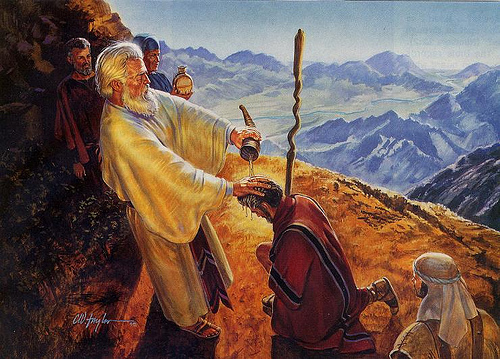


 How can one generation pass to the next generation its values, beliefs, and zeal? Or can it? Or look at it this way: Should one generation expect the next one to have the same kind of experiences and faith that it had? Discuss.
 Dwell more on the question of what our role is in the church. First, what is the role of the church as a whole? How do we fit in with that role? Should we always be in a position of giving? When is it appropriate to take?
 As we have studied the children of Israel on the move in the wilderness, what mistakes have they made that we are in danger of making, as well? What main lessons can we learn from what they have done? More important, what can we do to ensure that we don’t fall into the same traps? Or if we already have, how can we get out of them?


